Thursday, January 12, 2023

Sadaqa Jariyat

Sadaqa Jariyat

It is basically giving charity that will benefit people even after you die. Jariyah means “ever-flowing” , like an endless source of water, Sadaqa is charity. Literally it means “running”, but when applied to water it means ever-flowing. Wherever water flows, life grows. Same goes for knowledge.

The messenger of Allah ﷺ said once: “When a human being dies, all one’s deeds cease, save three: a Sadaqah Jariyah, [religious] knowledge [one leaves behind] from which others benefit, and a righteous child who prays for one” 真主的使者 ﷺ 說:“當一個人死亡時,他的所有行為都會停止,除了三個:Sadaqah Jariyah,一個人留下來使他人受益的宗教知識,以及一個為他祈禱的正直的孩子”

When you die, your wealth and possessions become useless, and your good deeds stop being counted. Except that kind of sadaqa, that keeps adding up for your soul and help make your scale heavier to reach Jannah inshaAllah.


Saturday, December 17, 2022

4 Sunni Schools of Fiqah -Sahfii , Hanbali , Maliki & Hanafi


遜尼派伊斯蘭教法學:

>哈乃斐派 HANAFI:The Hanafi school, from Abu Hanifah, a great scholar

>罕百里派 HANBALI:The Maliki school, from Imam Malik

>馬立克派 MALIKI

>沙斐儀派 SHAFI'I


哈納菲法學派(حَنَفِي‎,羅馬字:Ḥanafī)是伊斯蘭教法學的一大派別,屬於遜尼派。由艾布·哈尼法所成立,最初流行於伊拉克庫法一帶。在阿拔斯王朝的支持下,哈納菲法學派在伊拉克蓬勃發展,並向東擴展,到了9世紀,逐漸在呼羅珊和河中地區鞏固了自身的地位,並得到了當地薩曼尼德帝國統治者的支持。突厥語的傳播將該教派引入了印度次大陸和安納托利亞,並被採納為鄂圖曼帝國的主要教法學派。教法的權威來源之重要性由高至低排列為:古蘭經、聖訓、公議、伊智提哈德、類比、伊斯提哈桑、最後是當地習俗。在審慎時限制引用聖訓,比較重視類比和公議而不拘泥於教法句條。中國穆斯林普遍遵循哈乃斐主張。


瑪利基法(MALIKI)學派是伊斯蘭教法學的一大派別,屬於遜尼派。由馬利克·阿本·阿納斯於公元8世紀創立。在律法方面,該派別重視聖訓。教法的權威來源首先是古蘭經和聖訓,若仍有模糊不清之處,則依序參考公議、伊智提哈德、類比、公益(伊斯提斯拉赫)、最終為當地習俗。遵循馬立克學派的穆斯林主要分布在除埃及外的馬格里布阿拉伯國家和西非,海灣地區的科威特等國也有分布。


The main cause of the division among Sunnis is probably there different degrees of stress on one or more sources of law, though the text of Holy Quran and Sunnah is accepted by all these. The sub-division among Sunnis took place due to different interpretations put on law by the founders of the sub-schools.


The Holy Qur’an, Tradition and Ijtihad are the three main sources of Islamic law which govern and regulate all aspects of a Muslim’s public and private life. These laws relate to religious worship, prohibitions, and all contracts and obligations that arise in social life such as inheritance, marriage, divorce, punishments, conduct of war and the administration of the state.


The science of these religious laws is called Fiqah and the expert in this field such as a jurist is called a faqih (plural: fuqaha).


We read that Ijtihad, or the exercise of judgement, is a valid source of Islamic laws in areas where the Holy Qur’an and the Traditions are not explicit. But the exercise of this independent judgement can only be left in the hands of proper scholars of the Holy Qur’an and the Tradition.


The vast majority of Muslims give this right of independent reasoning to only four ancient Muslim theologians and jurists who lived in the first three centuries of Islam. These four fuqaha are:


Imam Abu Hanifa of Kufa

Imam Malik bin Anas of Medinah

Imam Muhammad al-Shafi of Medinah

Imam Ahmad bin Hanbal of Baghdad


Although a number of other jurists also became popular during their times, only the above four are now recognized by the vast majority of Sunni Muslims. These four great jurists and theologians tried to systemise the Islamic law into a comprehensive rational system which covered all possible legal situations. The four prominent schools of Islamic law are named after their founders and are called the Hanafiyya, the Malikiyya, the Shafiyya, and the Hanbaliyya schools of religious law.


Most Muslims regard these four schools as equally valid interpretations of the religious law of Islam. These schools are in good agreement on all essential aspects of the religion of Islam. They all acknowledge the authority of the Holy Qur’an and the Traditions as the ultimate source of the Islamic law. Only in areas and situations where these two sources are silent, do the four schools use their independent reasoning in which they may differ with each other.


1.Hanafi School:


The earliest school formed was by Imam Abu Hanifa (699-767 A.D.) of Kufa. It generally reflects the views of the jurists of Iraq. Abu Hanifa did not compose or write any books on law himself, but his numerous discussions and opinions as recorded by his disciples, form the basis of this school.


As a theologian and a religious lawyer, Abu Hanifa exercised considerable influence in his time. His legal thought is very consistent, uses high degree of reasoning, avoids extremes, and lays great emphasis on the ideas of the Muslim community. Other areas in which this school has a following include Turkey, the countries of the Fertile Crescent, Lower Egypt and India.


2. Maliki School:


The next school of law in order of time was the one founded by Imam Malik bin Anas (d. 795 A.D.) of Medinah and reflects the views and practises associated with that city. Imam Malik served as a judge in Medinah and compiled all his decisions in a book form called al-Muwatta (the Levelled Path).


Like the jurists of Iraq, Imam Malik preferred to depend more on the Traditions associated with the Companions of the Holy Prophet.The adherents of this school are predominantly in North African countries.


The Malikis' concept of Ijma differed from that of the Hanafis and other schools due to following reasons. 

● They understood it to mean the consensus of the community represented by the people of Medina. (Overtime, however, the school came to understand consensus to be that of the doctors of law, known as Ulama.) 

● Imam Malik's major contribution to Islamic law is his book al-Muwatta. The Muwatta is a code of law based on the legal practices that were operating in Medina. 

● It covers various areas ranging from prescribed rituals of prayer and fasting to the correct conduct of business relations. The legal code is supported by some 2,000 traditions attributed to the Prophet.


3. Shafi School:


The third school was founded by Imam al-Shafi (d. 820 A.D.) who was a disciple of Imam Malik. Imam Shafi placed great importance on the Traditions of the Holy Prophet Muhammad, may peace and blessings of Allah be upon him, and explicitly formulated the rules for establishing the Islamic law. He was a great thinker, had an unusual grasp of principles and a clear understanding of the judicial problems. This school is strong in Lower Egypt, Syria, India and Indonesia.


Shafi was the third school of Islamic jurisprudence. Following are the reasons that differentiate Shafi school of thought from other school:

● According to the Shafi School the principal sources of legal authority are the Qur'an and the Sunnah. ● Of less authority are the Ijma of the community and thought of scholars (Ijtihad) exercised through Qiyas. 

● Shafi School of thought stands in between the Maliki and Hanafi schools i.e. less in the way of Qiyas and personal opinion. 

● It excels in the technique of deductive reasoning for reaching a judgment.


4. Hanbali School


This school was founded by Imam Ahmad bin Hanbal (d. 855 A.D.) of Baghdad. Imam Hanbal did not establish a separate school himself; this was rather done by his disciples and followers.


The Hanbali School was the most conservative of the four schools. Its rigidity and intolerance eventually caused its decline over the years. In the eighteenth century, however, this school was revived with the rise of Wahhabism and the growing influence of the House of Sa’ud. Today, Hanbali school is followed only in Saudi Arabia. The Hanbalis insist on the literal injunctions of the Holy Qur’an and the Hadith and are very strict in the observance of religious duties.


The Hanbali School is the fourth school of law within Sunni Islam. Its distinguishing features are the following: 

● It derives its decrees from the Qur'an and the Sunnah, which it places above all forms of consensus, opinion or inference. 

● The school accepts as authoritative an opinion given by a Companion of the Prophet, providing there is no disagreement with another Companion. In the case of such disagreement, the opinion of the Companion nearest to that of the Qur'an or the Sunnah will prevail. 

● Unlike other Schools of thought, Hanbali School has almost no use for Qiyas (Analogy) or personal opinion, to such an extent that they even prefer narration of weak Hadith over Qiyas.


Although the Muslims generally apply the Islamic law according to the principles and details laid down by the four ancient jurists, legal situations keep arising from time to time for which there are no clear answers in these early schools of law. To cope with this changing aspect of Islamic society, particularly in the light of new facts, specialists in the field of Islamic law are asked to give their decisions using the traditional tools of legal science. Such a decision is called a fatwa and the religious scholar who gives this decision is called a mufti.


Fiqh 通常被定義為「伊斯蘭教法」。 這個定義有些欠缺,因為現代西方的法律概念不適合 fiqh 所包含的內容。 早期的穆斯林理解 fiqh 包括穆斯林行動的所有方面,從個人崇拜到社會互動,再到政府政策。 因此,最好將 fiqh 更廣泛地定義為伊斯蘭法學。


早期的戰鬥學者面臨的挑戰是知道如何將先知的榜樣應用到充滿活力的國際化世界隨著穆斯林世界逐漸擴大到包括西班牙、伊拉克和印度這樣遙遠而多樣的土地,法學家們開發了多種方法,旨在將先知的教義應用到他可能從未經歷過的情況中。


1- 沒有什麼地方比第一位偉大的法學家阿布·哈尼法(Abu Hanifa,卒於 767 年)的職業生涯更能體現戰鬥的創造力和活力。 作為一名在伊拉克出生長大的波斯人,他發現自己身處一個與一個世紀前先知的麥地那截然不同的世界。 伊拉克是阿拉伯人和非阿拉伯人、穆斯林和非穆斯林、沙漠游牧民和城市居民的交匯點。Abu Hanifa(和其他早期法學家)面對穆斯林生活中古蘭經的教導和先知(聖行)的榜樣的一個例子來自一份聖訓報告,其中先知派遣他的一位同伴 Mu'adh ibn Jabal 統治也門地區。 當先知問及當需要對一種情況作出裁決時他會如何反應時,穆阿茲回答說將依賴古蘭經,如果他在那裡找不到答案,他將依賴先知的榜樣, 如果先知從未就此問題發表過講話,他將依靠自己的推理找到合適的解決方案。 這條聖訓提供了一個基本框架,法學家可以根據該框架為被稱為 usul al-fiqh(字面意思是「法理學的來源」)的鬥爭創建一個認識論等級。


然而,問題仍然存在,尤其是在像阿布哈尼法的伊拉克這樣的地方,古蘭經、聖訓和同伴的榜樣都對這些地方保持沉默。 正是在這裡,卡利法學家提倡一種稱為 qiyas 的類比推理形式。生活在國際大都市伊拉克的阿布哈尼法認為有必要讓邏輯在決定 fiqh 在實際層面上如何運作方面發揮主要作用。 對他和他的學生小組來說,堅持對古蘭經和聖行的字面主義方法會使伊斯蘭教幾乎不可能應用於一個不斷變化的社會,這個社會與先知麥地那的社會截然不同。


2- 然而,Abu Hanifa 的當代 Malik ibn Anas(卒於 795 年)採取了不同的方法。 馬利克在麥地那出生和長大,他相信他的城市自先知時代以來的一個世紀裡沒有發生根本性的變化。因此,他認為,他那個時代麥地那人民的例子也可以作為法理學的來源。 他推斷,如果麥地那的所有人都同意某種特定的行動或做某事的方式,那麼這一定直接來自聖訓團,他們從先知那裡學到了它,使其幾乎與聖訓本身一樣強大。然而,重要的是要注意,雖然關於 fiqh 的強烈意見分歧很早就出現了,但這些發展中的學校並沒有將彼此視為異教徒,甚至不一定被誤導,因為他們的分歧涉及相對微小的問題,而不是基本的信條問題, 如下所示。


3- 第三種發展方法來自穆罕默德·沙菲伊 (Muhammad al-Shafii,卒於 820 年),他是一名加沙人,在年輕時前往麥地那跟隨馬利克本人學習。 與前兩位法學家不同,沙菲在麥地那逗留後進行了相當多的旅行,在也門、伊拉克和埃及生活過。然而,他自己的方法與前兩者不同,因為他不太可能像伊拉克人民那樣使用理性。當面對相互矛盾的聖訓報導時,沙菲伊提倡廢除制度,認為如果先知早年的聖訓與他晚年的聖訓相矛盾,則可以在戰鬥中忽略它。


4- 四位偉大法學家中的最後一位是艾哈邁德·伊本·漢巴爾(Ahmad ibn Hanbal,卒於 855 年),他本人就是沙斐儀的學生。 在這四個人中,他的方法是迄今為止最寫實和最抗拒人類邏輯的方法。雖然他仍然像其他三個人一樣在他的方法論中為 qiyas 留出了空間,但他認為應該盡可能地限制它,因為人類的理性是不完美的,並且對聖訓的字面方法是最佳的。他們一起形成了一個光譜,一端是 Hanafis,另一端是 Hanbalis,關於人類邏輯在解釋古蘭經和聖訓中的作用。每當穆斯林世界出現以前從未遇到過的新問題時,例如咖啡和煙草在 15 和 16 世紀的到來,fiqh 學者就會運用四大學派的法律理論來對這些情況作出裁決 .

Tuesday, December 6, 2022

Send Darood on Prophet Muhammad


Common transliterations and abbreviations used for صَلَّى ٱللَّٰهُ عَلَيْهِ وَسَلَّمَ” sallallahu alayhi wa sallam:


●Sallallahu alaihi wasallam

●salla allahu alayhi wasallam

●salla llahu alayhi wa-sallam

●SAW (Sallallahu alaihi wasallam)

●SAAW

●SAWS

●PBUH (peace be upon him)

ﷺ ●

“Prophet Hazrat Muhammad SAW (pbuh) likes that his Ummat (ummah) recite Durood on him and Allah descends blessings on his Ummat”


There are differences of opinion among scholars as to whether abbreviations such as “SAWS” can be used in writing, or if the phrase should always be spelled out entirely. And Allah knows best.


5 Durood Shareef


1. Durood-E-Ibrahimi

●Translation: 

Oh Allah, send grace and honour on Muhammad and On the family and true followers of Muhammad just as you sent Grace and Honour on Ibrahim and on the family and true followers of Ibrahim. Surely, you are praiseworthy, the Great.


●Transliteration: 

Allah humma Sali aala muhammadin

wa aala aali muhammadin,

kama sal-lita aala ibraheema

wa-aala aali ibraheema

innaka Hameedum Majeed.


Allah huma barik alla muhammadin,

wa aala aali muhammadin,

kama barakta aala ibraheema

wa aala aali ibraheema

innaka Hameedum Majeed


2. There is the 80 years SAWAAB (Reward, blessings) Durood Shareef. Read this Durood Shareef 80 times after Farz of Asr in Jumma before standing up, result in 80 years of sins forgiven by Allah (SWT)


●Translation: O Allah send blessings upon Muhammad (SAWW) our chief the unlettered apostle, and send blessings upon his family, and thy favours and thy salutations. 

●Transliteration:  
Allahumma salle a'la sai-ye-de-na Muhammadin-ninna beiyyil ummiyyae Wa ala aali-he wassallim tasleema.


3. 


Notes:

You can say this Durood Shareef 3 times after Fajr and Maghrib or even after all namaz.

"If you read this 3 times you will keep getting the reward the whole day inshaALLAH."


The beauty of this Durood is it is very similar in each line, the differences only lie in

1) Allahumma Salle Ala Sayyedina Muhammadin FI AWWALI KALAMINA

2) Allahumma Salle Ala Sayyedina Muhammadin FI AUSATI KALAMINA

3) Allahumma Salle Ala Sayyedina Muhammadin FI AAKHRI KALAMINA


4. 

●Transliteration:
Assalatu Wassalamu Alaika Ya Rasool ALLAH

●Translation:   
Peace and blessings be on you, O Messenger of Allah. (sallahu alihi wa alihi wassallam)


5. 


Sallallahu Alaihi Wasallam --> Send Salaam to Prophet (only)
Sallallahu Alaihi Wa Alaihi Wasallam  --> Send Salaam to Prophet and His all descendants


Thursday, December 1, 2022

Vowels in Arabic

 Vowels in Arabic

In Arabic short vowels are not a part of the Arabic alphabet, instead they are written as marks over or below the consonant and sometimes over or below a long vowel.

There are just six vowels in Arabic. Three short vowels: a, i and u. The short vowels in Arabic are: a, i and u. They are normally not written.

The long vowels in Arabic are aa, ii and uu. They are written by using three of the letters in the Arabic alphabet.


The letter Alef is used in the long vowel aa

The letter yaa is used in the long vowel ii

The letter waw is used in the long vowel uu


The letters we just looked at, alef, ya and waw, has a double functionality. Sometimes they are consonants, and sometimes they are long vowels.


Alef functions as the long vowel "aa" when it comes after a and has no vowel after. Ya functions as the long vowel "ii" when it comes after i and has no vowel after. Waw functions as the long vowel "uu" when it comes after u and has no vowel after.


In all other cases, the letters functions as consonants. The letter ya sounds like "y" when it is a consonant and the letter waw sounds like "w" when it is a consonant.


Tuesday, November 29, 2022

我讀【古蘭經】之筆記: 第二十九章—蜘蛛 (AL-ANKABUT)

 第二十九章—蜘蛛


[29:2] Alif Lam Mim
→Al Muqatta'at (所使用的字母要分開發音) 寫在一章之前是特指主的常德,即該章的主題的縮寫詞,與它們所表示的真主常德有深深地連繫。它們不是任意地放在各章的開始部分,它們的字母也不是任意組合的。在它們的不同組合之間有深刻與深遠的連繫,而且組成這些縮寫詞的字母也有著明確的目的。那些章的主題中如果沒有縮寫詞的字母,那就是從屬於或按前面的具有這些縮寫詞的那些章的格式行事。對於Muqatta'at的意義,有兩個看來更為可信:
(a) 每個字母具有肯定的數值(Jarir)。 字母Alif Lam Min的數值是71 (Alif的數值是1,Lam是30,Min是40),把Alif Lam Min放在尺張開端,可能意指此章的主題,即早期伊斯蘭教的整頓與鞏固將會經過71年的時間才能完成。
(b) 如上所述,它們是安拉特種常德的縮寫而特種縮寫被放置之章,在主題方面,與其所代表的常德是有關聯的。這樣,寫在此章以及第2、3、30、31與32章開端的縮寫詞Alif Lam Min的意義是:「我是全知的安拉。」Alif代表Ana我,Lam代表Allah安拉而Mim代表A'lamu全知者;或者按照有些人說,Alif代表Allah安拉,Lam代表Jibri吉布里爾而Min代表Muhammad穆罕默德,意指此章的中心論題是安拉通過吉布里爾授予穆罕默德自己的知識

[29:42] 那些捨棄安拉,把其他東西當作友人的情況,和蜘蛛的情況是相似的。它蜘蛛為自己造了一所房子。但最脆弱的房子是蜘蛛的房子。但願他們知道!The example of those who have adopted patrons other than Allah is like the spider that has made a house, while indeed the weakest of houses is the house of the spider. If only they know.
→本章章名看來源出42節經文,該節經文用美麗的明諭說明多神信念的虛假與無效性,它說這些信念脆弱易斷像蜘蛛網一樣經不起理解力的批判。前一章結束時有一個提示:穆聖被趕出麥加時,是一個沒有朋友的逃亡者並被懸賞緝拿,但他將以勝利者和征服者的身分回到他的故土麥加
本章開始時警告信者說,長時期的艱苦工作,耐心忍受艱難與貧困,是人生成功的必備條件。

本章繼續發展下一主題:信者的信念要經過嚴峻的考驗後才能在今世和後世受到各種恩寵和賜福。他們必須經過血與火的嚴峻考驗才能贏得它們。只有真心誠意地懺悔,以謙恭懺悔的心像安拉求助以及真正地、持久地改造自己的生活,一個人才能得到安拉的寬恕,才有資格受取安拉的恩惠和賞賜。

本章回復到信者受迫害這一主題,就接著說,信者為真理事業效勞時不能容許任何艱難困苦阻擋他們;並強烈地規勸他們如果對安拉效忠和對父母盡孝二者產生衝突時,他們應以前者為主。

然後簡短敘述了先知努哈、伊布拉欣、魯特和其他幾位安拉使者的生平來說明迫害從來也不能阻止或阻礙這一真正宗教的進展,而且在宗教信仰中用強迫的手段是從來也沒有什麼好處的,一個民族不能被迫永遠順從於強加在他們身上的觀點。

本章又說,多神信念像蛛網般脆弱易斷,卻經不起理性和尋根究底的批判。因此,既然已降示了一本像《古蘭經》這樣的經典,而且它能滿足人類一切道德上的需求又顯然能把人類提高到道德的最高峰,那麼,信者就沒有理由和根據來繼續保持他們崇拜偶像的種種信念。

本章進一步處理了不信者經常提出的一個反對意見:《古蘭經》是穆聖編寫的;與此相反,它是為了答覆不信者對安拉的跡象和奇蹟的要求而顯示的安拉最偉大的一個奇蹟

本章快結束時信者得到安慰與保證,如果他們在目前所受到的迫害中保持堅定不移的毅力,他們將有偉大光明的未來。

本章結束時有這樣一種提示:信者將得拿起刀劍來保衛伊斯蘭教並為反對邪惡勢力進行英勇奮鬥(Jihad)。但是它說,真正為安拉而奮鬥不是殺人或被殺,而是努力贏得安拉的喜悅和傳播《古蘭經》的教義

[29:3] 這個時代的人以為他們只要說過「我們信仰了」,便將不被過問,也不受考驗嗎?Do people think that they will be left (at ease) only on their saying, “We believe. and will not be put to any test?
 ←[3:180] 在安拉把好的和壞的分開以前,他不會把信者放在現在的情況下就不過問了。除非安拉所選擇的那些自己喜悅的使者,他不會啟示你們未來的知識。Allah is not to leave the believers in the state you are in, unless He separates the impure from the pure. Allah is not to inform you of the Unseen. But Allah selects from His messengers whom He wills. So, believe in Allah and His messengers. If you believe, and fear Allah, you will deserve a great reward.

 ←[9:16] 你們認為安拉在尚未顯出你們中那些奮鬥而且除了安拉及其使者和信仰者外不與任何人保持深交的人之前,你們會被放任不問嗎?安拉洞悉你們的一切行為。Do you think that you will be left alone (without being tested), while Allah has not yet seen those of you who struggle in Jihad and never take anyone as their confidant other than Allah and His Messenger and the believers? Allah is fully aware of what you do.

[29:4] 我確已考驗了在他們以前的人,也將考驗他們安拉必將顯示誰是講實話的,誰是說謊言的Indeed We have tested those who were before them. So Allah will surely know the ones who are truthful, and He will surely know the liars.

[29:6] 凡是仰望會遇安拉的,他應當知道安拉所決定的限期一定會到來。他是全聽的,全知的。Whoever hopes to meet Allah (must be sure that) Allah’s appointed time has to come, and He is the All-Hearing, the All-Knowing.
 ←[18:111] 所以凡是希望會遇到他養主的人,他要實行善功,不要設立任何一個與自己養主同等的崇拜對象。So the one who hopes to meet his Lord must do righteous deed and must not associate anyone in the worship of his Lord.
 ←[84:7] 人啊!你確是十分努力趨向你的養主;然後會遇見他的O man, you have to work hard constantly to reach your Lord, and then you are going to meet Him.


[29:7] 凡是為安拉奮鬥的人,實際上他只為自己奮鬥、安拉是無求於眾世界的。他沒有他們崇拜的需要Whoever strives, strives for his own benefit. Surely Allah is independent of all the worlds. 

→這節經文簡短而非常貼切地說明了一個Mujahid——真正為安拉而奮鬥的人。高尚的理想,以及始終如一並且經久不息地努力,在實際行動中實現這些理想,在伊斯蘭教用語就稱為Jihad。具有這些高尚理想,而且能根據這些理想而生活的人,就是一個Mujahid。這就是這一單詞真正的意思。

[29:19] 使者的責任只是明白地傳達使命,而不強迫人們信從。The messenger has no more obligation than to convey the message clearly.”


[29:20] 難道他們不知道安拉怎麼創造萬物,並再造它們?這對於安拉是容易的。Did they not see how Allah originates the creation, then He will do it again. Surely this is easy for Allah.
→這節經文意示安拉的創造再創造法則將這樣地起作用:安拉將透過穆聖在舊的人類和舊的秩序的廢墟上,創造出一個新的人類和新的秩序

[29:21] 你說:「你們要周遊大地觀察安拉怎樣創造了萬物。然後再造它們。安拉對於萬物都是全能的。Say, "Travel in the earth, and see how He originated the creation. Then will Allah provide the latter creation."Surely has power over all things.
[29:22] 他懲罰他所意欲的人,也對他意欲的人施行仁慈。你們都將被帶回到他那裏去;He punishes whom He wills and has mercy on whom He wills. And to Him you are to be turned back.
這一用語被使用在《古蘭經》中好幾處。(6:12/ 12:110/ 30:10/ 35:45/ 40:83) 而且幾乎每處之後都有一句指出創造另一個民族來代替一個毀滅了的民族。這節經文並沒有談及死後復生,只談了民族興衰的現象。正如《古蘭經》中好幾處所說的那樣,安拉不是任意懲罰的,而是在實在應受懲罰時才給以懲罰。
←[9:12] 你對他們說:「要遊歷大地,觀察誣罔先知說謊者的結局是怎樣的了?」Say, “Go about the earth, and see what was the fate of those who rejected (the prophets).” 
←[12:110] 他們不信者未曾在大地上旅行,以觀察前人的終局是怎樣的嗎?Have they not traveled in the land where they could have seen how was the fate of those before them?
←[30:10] 他們不曾周遊大地,觀察他們前人的結局如何嗎?Have they not traveled on earth to see how was the end of those before them? 
←[35:45] 難道他們不在大地上旅行,觀察他們以前人們的結局如何? Did they not travel in the land and see how was the end of those before them?
←[35:45] 難道他們不在大地上旅行,以觀察他們以前人們的結局是怎樣的? Have they not traveled through the earth and seen how was the fate of those before them?


[29:26] 他伊布拉欣說:「你們捨棄安拉把偶像做為了崇拜對象。你們的這種行為是為了在今世生活裡增加與其他多數教徒的互相親愛。然後在復生日,你們互相拒絕,互相詛咒。你們的歸宿將是火遇,你們將沒有任何幫助者。 」And he (Ibrahim) said, “You have adopted idols instead of Allah, only because of love (you have) with each other in the worldly life. Then on the Day of Judgment you will reject each other, and will curse each other. And your abode is the Fire, and you will have no helpers.”
→虛假的眾神靈和他們追隨者之間的爭辯,說明以罪惡和否認真理為基礎的友誼決不會持久


[29:45] 安拉以特殊的目的創造了天地。其中對於信仰的人確有一個跡象。Allah has created the heavens and the earth with truth. Surely in this there is a sign for the believers.
→Bilhaqqi這一用語表示,創造天地清楚地證明了安拉明智的計畫和目的,以及在天體和地球物體之間運行著一種深澳而完美無缺的安排。

[29:46] 你要宣讀你所受降的經典,必固守拜功拜功確能阻止下流的言行和顯著的罪惡紀念安拉實在是最大的美德。安拉知道你們所做的。Recite (O Prophet) what is revealed to you of the Book, and establish Salah “Surely Salah restrains one from shameful and evil acts. Indeed remembrance of Allah is the greatest of all things. Allah knows what you do.
→Utlu的意思是:宣告;宣傳;宣讀;背誦;復述;信奉。
→這節經文講了三件事:宣傳和宣讀《古蘭經》固守拜功紀念安拉。做這三件事的目的,是把人類從罪惡的束縛中解救出來,以及幫助他們提高自己的道德與思想堅定地相信安拉,是一切降示的宗教的基本原則,因為這種信念能有力地阻止人類邪惡的傾向和行動。這就是《古蘭經》反覆講述安拉的存在,並談及他偉大的力量、光榮和仁愛,以及極大地強調以伊斯蘭拜功的形式來紀念安拉的理由。這種拜功,如果能按照它必須的條件來完成的話,必然會提高並達到思想和行動的純潔性。


[29:47] 你們要以最好的論證與有經人辯論真理,但與不公平的人例外,根本不要與他們做任何辯論。告訴他們:「我們信仰了我們所受降示的經典和你們所受降示的經典;我們所崇拜的對象和你們所崇拜的對象是同一位,我們是順從他的。」Do not debate with the people of the Book unless it is in the best manner, except with those of them who commit injustice. And say, “We believe in what is sent down to us and sent down to you, and our God and your God is One, and to Him we submit (ourselves).”
→這節經文制定了把我們的教義宣傳給別人聽時,指導我們的一個非常穩妥的原則。開始時,我們應該把宣傳的重點放在我們和對方共有的那些信念的宗教原理上。舉例說,我們被告知說,當我們向「有經的人」宣講時,應該從安拉的獨一性安拉的啟示這兩個基本教義開始。


[29:48] 我們就這樣對你下降了全部經典;凡是蒙我賜了這部經典的人,他們都信仰它,有些具有《摩西五經》真正知識的人也都信仰它。只有不信的人才頑固地否認我的啟示。Thus We have sent down the Book to you. So those to whom We have given the Book believe in it. And from these (the people of Makkah) there are ones who believe in it, and no one rejects Our verses except the infidels.

[29:49] 你在這《古蘭天經》下降之前,未曾讀任何書籍,也未曾用右手寫字果然你會讀書寫字,那麼,誣指《古蘭》是謊言的人會將獲得懷疑的一理由。You (O Prophet,) have never been reciting any book before this, nor have you been writing it with your right hand; in that case the liars would have doubted.

[29:50] 但這《古蘭天經》有知識者胸中明顯跡象的集成。除了不義的人之外,沒有人拒絕我的跡象。But it (the Qur’an in itself) is (a package of) evident signs in the hearts of those who are given

knowledge. And no one rejects our verses except the wrongdoers.

前一節經文述及能證實《古蘭經》是安拉降示的話的外部明證,而這節經文提供了一個內在的明證,即那些受賜而具有《古蘭經》知識的人們的心靈中會湧出安拉光明的泉水。

[29:52] 我降賜了你這部完善的經典,且有人把它向他們不斷宣讀,這對他們難道不夠嗎?其中對信仰的民族確有大的仁慈和勸告。Is it not sufficient for them that We have sent down to you the Book that is being recited to them? Surely in it there is mercy and advice for a people who believe.

[29:59~60] 那些信仰而行善的人,他們堅定自己的信行,信賴自己的養主As for those who believe and do righteous deeds, who observe restraint patiently and place their trust in their Lord alone.

[29:65] 今生的生命只是遊戲和消遣,只有後世的生命才可稱為生命。如果他們能知道,多麼好啊!This worldly life is nothing but an amusement and play, and the Last Abode is the real life indeed. Only if they know!
→如果不去為崇高事業而忍受艱難貧困的生活,不去為安拉的正道而作出犧牲,那麼,生活
「只是遊戲和消遣」,一種無用而沒有目的的生存有目的的生活是在追求崇高的目標以即得到安拉創造人類的那一永恆的生命中度過的。

[29:68] 他們不知道,我把聖地麥加做成了平安的地方,而其四周的人都遭受搶奪嗎?難道他們信仰虛假,否認安拉的恩惠嗎?Did they not see that We have made a peaceful sanctuary (Haram) while (other) people around them are snatched away? Do they still believe in falsity and reject Allah’s grace?
→這節經文有效地證明天房是安拉的聖寺。自從穆聖降臨以來,它就被神聖地宣告為人類永久的朝向,而且即使在「愚蠢的時代」,那時阿拉伯人還不知道人生的可貴,稱為Haram的這塊土地——天房這一圍地——總是一塊安拉的避難所。外界不安全時,這地方確是完全平安的。


[29:69] 誰能比奉安拉之名捏造虛偽,或者否認已達到了他的真理還不義呢?難道火獄裡沒有辜負主恩者的住所嗎?Who is more unjust than the one who forges a lie against Allah or rejects the truth when it comes to him? Is there not in Jahannam a home for disbelievers?

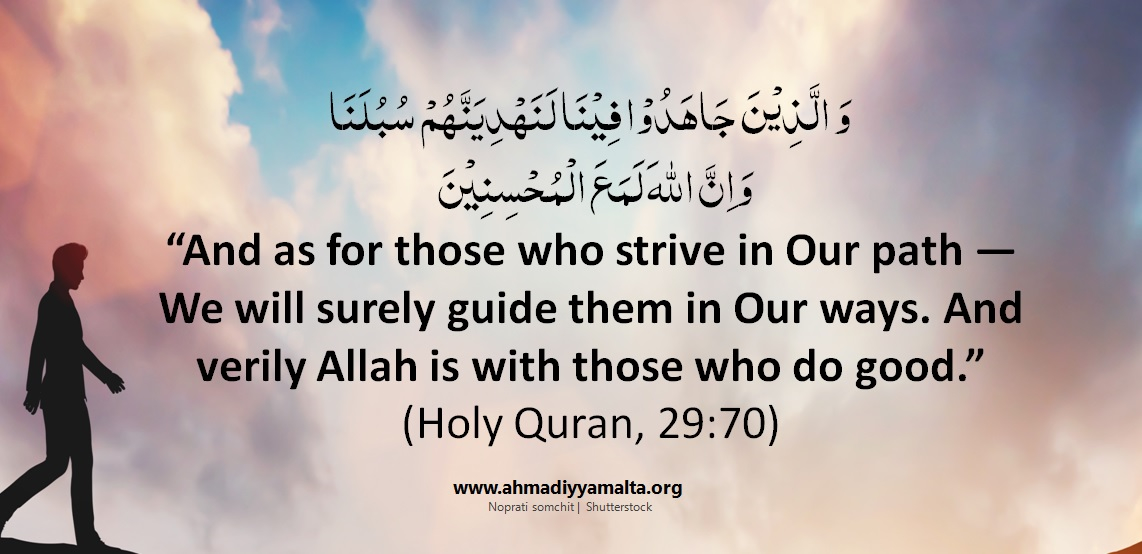
[29:70] 凡是為了與我會遇而奮鬥的人,我一定領導他們知行我的道路。安拉是與行善的人同在的。As for those who strive in Our way, We will certainly take them onto Our paths, and indeed Allah is with those who are good in deeds.
→Jihad,由伊斯蘭教規定,不作「殺死」和「被殺」解,而是為贏得安拉的喜悅而奮鬥。Fina這一單詞的意思是「與我們會遇」。


Saturday, November 26, 2022

Allahu rabbi LA sharikalahu 874

Wazifa is recitation of any dua which is practiced regularly (sometime for a specific period of time, e.g. for three, seven or forty days, and/or regularly without any specific time). Dua is a recitation to Allah for one time, like we do after our prayer or at any time.

To fulfil our desires we pray, make Dua. But sometimes when we don't get these needs, we recite Wazifa. Reciting a verse of Quran or any recommended Dua for a particular period of time or a particular number is called Wazifa.

E.g: Wazifa for marriage/job/any wish etc

Wazifa is a form of recitation or dhikr that is done to achieve a desired result within a specified period of time. Certain words or verses are chosen from Quran and other Islamic text, and recited repeatedly until the prayer is answered. Setting a deadline (3, 11 or could be 40 days) for wazifa is also common, which is usually recommended by a spiritual healer or practitioner.

The literal meaning of wazifa is “to employ” or simply put, "to take on", “to put something into practice.”

Problems and issues wazifa is used for

In most cases, wazifa is used to solve problems and issues related to material world like health, wealth and relationships. There are tons of problems and issues that people want to solve and they resort to wazaif as an easy fix because all they have to do is sit, recite, repeat and continue the practice for a few days and convince God to fulfill their wish.

Some of the common topics and things people use wazifa for include marriage problems, pregnancy and baby birth, cure of black magic and evil eye, success in business and money, cure and healing of various diseases such as cancer, diabetes, and physical disabilities. 


Allahu Rabbi la Sharika Lahu Meaning, Wazaif and Benefits


A very powerful and important wazifa that could make impossible things possible in your life. This wazifa has to be done constantly for at least 60 days before it starts to deliver the results.


English Meaning and Transliteration:

English transliteration: ‘ALLAHU Rabbi La Shareeka Lahoo‘

English translation: ALLAH is my Lord without any partners


Authentic Hadith:

Whoever is stricken with sadness, grief, sickness or hardship and says: ‘Allah is my Lord, without any partners’ [Allahu Rabbi, la sharika lah], then it will be removed from him.” [‘Sahih al-Jami’ #6040]


This wazifa can be for sickness, grief or hardships. You have to recite constantly particularly after namaz timings. All five. And also at mid-night, tahajjud time. The conditions for doing wazifa are:

1- Stay in clean condition physically (ablution)

2- Five times a day prayer

3- Recite 11 times Durood Shareef (Durood-e-Ibrahimi) before starting the wazifa

4- Do Astaghfar a lot

5- Do constantly until Allah accepts your prayer

6-Pay Gratitude to Allah

7- Do Sadqa/Charity Daily According to your financial condition


Important Caution To Take Before Making This Wazifa Work:


Make sure that you are doing this wazifa for a legit and halal purpose. If used negatively, the wazifa will backfire and harm you and your life. This is the best wazifa for healing sickness, grief and hardship of any kind. Do this wazifa for yourself only. Or ask the person sick to do this wazifa themselves.